
Kenetrek Mountain Extreme 400 Hunting Boot - Product Review
Kenetrek Mountain Extreme 400 Review
 The picture above was taken a few weeks ago right before I hiked up a fairly steep bush-covered hill to a water hole to set a trail camera. The Kenetrek Mountain Extreme 400’s have taken me many such places, and I’ve logged hundreds of miles in them, from hunting and scouting the high country, backpacking in to new areas to get the lay of the land and try to find a big buck, shed hunting in the snow and mud across several states, and everywhere in between. I have worn these boots for any and all outdoor activities for over 2 years now, and while the wear and tear is starting to show, they’re definitely still going strong.
Instead of starting out by listing the manufacturer’s specs on the boots (you can find these pretty easy with a quick Google search), I’ll get right into my personal experiences with them.
Initial fit and break-in
These have been my first ‘high-end’ pair of hunting boots. Prior to these, I had Asolo boots, and while they were pretty decent boots, I figured if I’m going to hunt/backpack/scout in all sorts of terrain and weather, I needed a pair of boots that can stand up to whatever I’m going to encounter. The Asolo’s I’d been using had many of the qualities that I wanted, but they definitely weren’t water-proof, they weren’t insulated, and the sole wasn’t as stiff as I’d like and resulted in my foot shifting in the foot bed and getting sore while side-hilling or hiking in extremely uneven terrain. I remember one general season deer hunt I used them on, it had snowed early, and while that is what most people long for so that the bucks will be moving more, I simply remember having cold feet for most of the hunt. So after that season, I determined that my next gear upgrade had to be a better pair of boots. There were two main reasons I selected the Kenetrek Mountain Extreme 400’s:
The picture above was taken a few weeks ago right before I hiked up a fairly steep bush-covered hill to a water hole to set a trail camera. The Kenetrek Mountain Extreme 400’s have taken me many such places, and I’ve logged hundreds of miles in them, from hunting and scouting the high country, backpacking in to new areas to get the lay of the land and try to find a big buck, shed hunting in the snow and mud across several states, and everywhere in between. I have worn these boots for any and all outdoor activities for over 2 years now, and while the wear and tear is starting to show, they’re definitely still going strong.
Instead of starting out by listing the manufacturer’s specs on the boots (you can find these pretty easy with a quick Google search), I’ll get right into my personal experiences with them.
Initial fit and break-in
These have been my first ‘high-end’ pair of hunting boots. Prior to these, I had Asolo boots, and while they were pretty decent boots, I figured if I’m going to hunt/backpack/scout in all sorts of terrain and weather, I needed a pair of boots that can stand up to whatever I’m going to encounter. The Asolo’s I’d been using had many of the qualities that I wanted, but they definitely weren’t water-proof, they weren’t insulated, and the sole wasn’t as stiff as I’d like and resulted in my foot shifting in the foot bed and getting sore while side-hilling or hiking in extremely uneven terrain. I remember one general season deer hunt I used them on, it had snowed early, and while that is what most people long for so that the bucks will be moving more, I simply remember having cold feet for most of the hunt. So after that season, I determined that my next gear upgrade had to be a better pair of boots. There were two main reasons I selected the Kenetrek Mountain Extreme 400’s:
- A local sporting goods store had them in stock so that I could try them on and see how they fit before buying (this is crucial!).
- A recommendation from a friend who’d used them for years and really liked them.
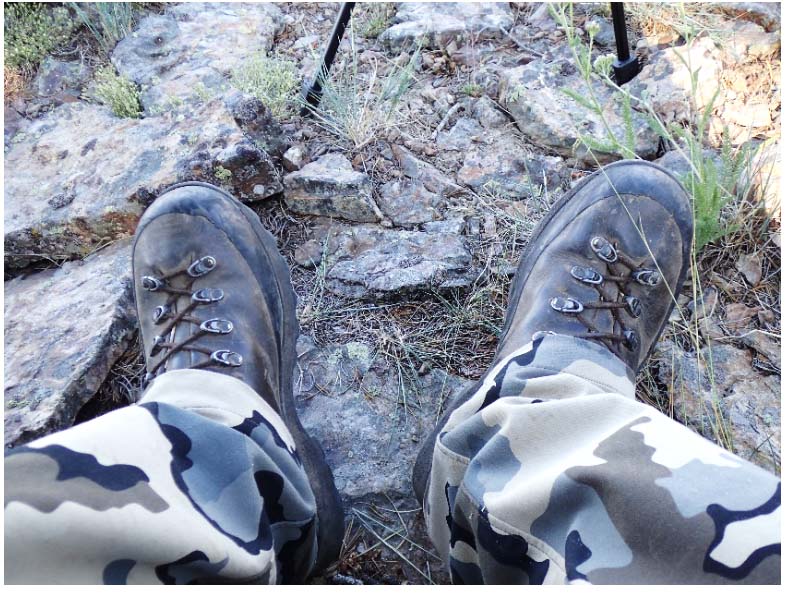 Kenetrek Mountain Extreme 400s on a scouting trip at 9500’ looking for Mule Deer in mid-July.
Another feature I really like about these boots is how stiff the soles are. Some like a softer sole, but I’ve found that I prefer a stiffer sole. I know for me personally, a stiffer sole definitely helps in preventing hot spots and blisters, because as I traverse uneven terrain, my foot shifts less in a stiffer boot. Something that really adds to the soles’ stiffness is the steel shank in the sole. When researching the boots before buying, I honestly thought that this was overkill and would just make the boots heavier and more awkward to wear. If you’ve never worn a very stiff mountain hunting boot like I hadn’t prior to buying these, they do definitely feel different (and heavier) the first few times you wear them, but now I love the stiff foot bed and I don’t think I could go back to a much lighter, flexible pair of boots; it just wouldn’t feel right to me. And to be completely honest, I don’t even notice the weight difference between these boots and my Asolo’s I used to wear (and still have actually) once I put them on. So in the end, it’s basically a trade-off: do you want a little heavier, stiffer, more supportive boot? Or do you want to go the lighter route and risk your foot ‘sloshing around’ in your boot when you’re on uneven terrain because the sole flexes so much and you feel all those little rocks and bumps in the dirt? To me, a stiffer boot is by far the better option, and every time I’m on a steep hill with a pack on, it reconfirms my decision as I’m able to traverse the hillsides with very minimal shifting or hot spots on my feet.
Boot care, wear, and tear
The Kenetrek’s wind-tex waterproof material really is completely waterproof. I’ve waded many creeks and streams in them, hiked in snow, and sloshed through mud in them and never once had any water penetrate to my feet. I like to think this is largely due to how I take care of them.
One thing that I am convinced helps to prolong the waterproofness of the boots is to regularly wax them. When I purchased the boots, I also purchased and have used their boot wax regularly and have been pleased with the results. By regularly waxing the boots, you not only prolong the life of the boot leather and its water repellency factor, you’re also preventing any additional ‘water weight’ to accumulate in the leather, which can slightly increase the weight of the boots while simultaneously reducing the leathers ability to repel additional water.
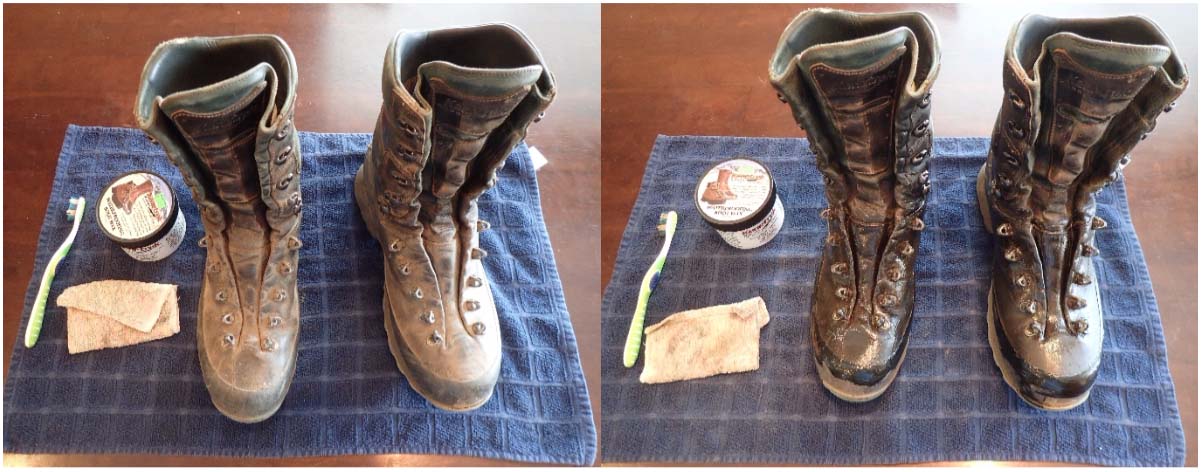
I try to wax my boots periodically, and do so more frequently in the winter and spring when I encounter more moisture while out hiking. I also make sure to remove as much of the mud and grit as possible after every time I take them out hiking. After recently returning from a scouting trip, I decided they were due for a waxing. I have been using an old toothbrush and a rag to apply the wax. I apply it very thickly to all the leather parts of the boot and let it sit until the next day before wiping off any excess wax. Below are some before and after shots.
Kenetrek Mountain Extreme 400s on a scouting trip at 9500’ looking for Mule Deer in mid-July.
Another feature I really like about these boots is how stiff the soles are. Some like a softer sole, but I’ve found that I prefer a stiffer sole. I know for me personally, a stiffer sole definitely helps in preventing hot spots and blisters, because as I traverse uneven terrain, my foot shifts less in a stiffer boot. Something that really adds to the soles’ stiffness is the steel shank in the sole. When researching the boots before buying, I honestly thought that this was overkill and would just make the boots heavier and more awkward to wear. If you’ve never worn a very stiff mountain hunting boot like I hadn’t prior to buying these, they do definitely feel different (and heavier) the first few times you wear them, but now I love the stiff foot bed and I don’t think I could go back to a much lighter, flexible pair of boots; it just wouldn’t feel right to me. And to be completely honest, I don’t even notice the weight difference between these boots and my Asolo’s I used to wear (and still have actually) once I put them on. So in the end, it’s basically a trade-off: do you want a little heavier, stiffer, more supportive boot? Or do you want to go the lighter route and risk your foot ‘sloshing around’ in your boot when you’re on uneven terrain because the sole flexes so much and you feel all those little rocks and bumps in the dirt? To me, a stiffer boot is by far the better option, and every time I’m on a steep hill with a pack on, it reconfirms my decision as I’m able to traverse the hillsides with very minimal shifting or hot spots on my feet.
Boot care, wear, and tear
The Kenetrek’s wind-tex waterproof material really is completely waterproof. I’ve waded many creeks and streams in them, hiked in snow, and sloshed through mud in them and never once had any water penetrate to my feet. I like to think this is largely due to how I take care of them.
One thing that I am convinced helps to prolong the waterproofness of the boots is to regularly wax them. When I purchased the boots, I also purchased and have used their boot wax regularly and have been pleased with the results. By regularly waxing the boots, you not only prolong the life of the boot leather and its water repellency factor, you’re also preventing any additional ‘water weight’ to accumulate in the leather, which can slightly increase the weight of the boots while simultaneously reducing the leathers ability to repel additional water.
I try to wax my boots periodically, and do so more frequently in the winter and spring when I encounter more moisture while out hiking. I also make sure to remove as much of the mud and grit as possible after every time I take them out hiking. After recently returning from a scouting trip, I decided they were due for a waxing. I have been using an old toothbrush and a rag to apply the wax. I apply it very thickly to all the leather parts of the boot and let it sit until the next day before wiping off any excess wax. Below are some before and after shots.
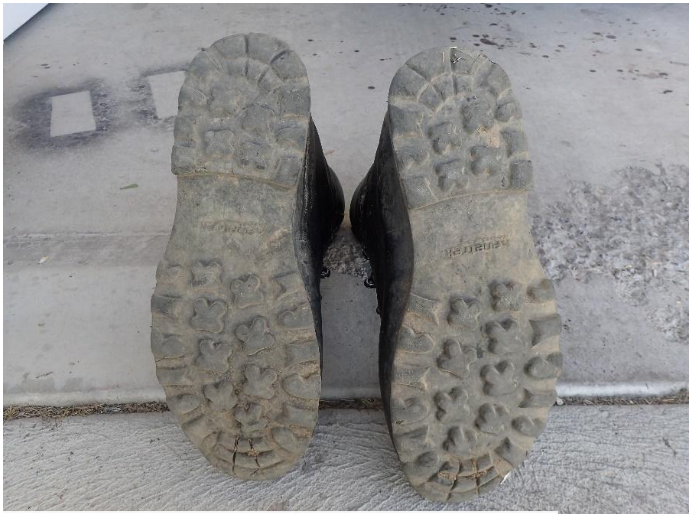
 I thought I’d also include a picture of the soles to show how much they’ve got left after over 2 years of hard use. I’ve heard of people getting their boots resoled, but I have had no need to yet. I think the boots will wear out before the soles do. As I stated earlier, I’ve logged several hundred miles on these boots and the soles still have plenty of traction left. I have yet to notice any spots where the sole might be coming unglued or detached from the foot of the boot itself, and I check pretty regularly as it still impresses me how well they’ve held up. I’m always thankful for their aggressive grip when I’m traversing a steep hillside with a loaded pack. Below is a picture I took just the other day of the soles.
 Now this wouldn’t be an honest review if I didn’t include at least something that wasn’t all roses and sunshine about the boots. If I could change one thing about them, it would probably be their height. The Mountain Extreme 400s top out 10” up your leg. While I do really like the ample ankle support these high-top boots provide, I think 10” might be a little much for me. I think that a lower height would also help with how warm they can feel on summer scouting trips or when the weather’s pretty warm. I think if I don’t end up getting another pair of the Mountain Extreme 400s for my next boot, I would go with something very similar in terms of stiffness and added insulation, but in the 6-8” height range.
So, in conclusion, if you are looking for a boot to protect your feet from the elements, won’t give you blisters or even hot spots after a respectable break-in period, will keep your feet ready to continue hunting the high country day after day of going up and down steep hills, and will be in excellent condition even after many miles of hard use, look no further than the Kenetrek Mountain Extreme 400 boots. I have been very pleased with mine, and I think you will be too if you break them in right and care for them. But don’t just take my word for it, go try them on and make sure they’ll agree with you from the get-go. It could be the start of a very long lasting relationship!
Now this wouldn’t be an honest review if I didn’t include at least something that wasn’t all roses and sunshine about the boots. If I could change one thing about them, it would probably be their height. The Mountain Extreme 400s top out 10” up your leg. While I do really like the ample ankle support these high-top boots provide, I think 10” might be a little much for me. I think that a lower height would also help with how warm they can feel on summer scouting trips or when the weather’s pretty warm. I think if I don’t end up getting another pair of the Mountain Extreme 400s for my next boot, I would go with something very similar in terms of stiffness and added insulation, but in the 6-8” height range.
So, in conclusion, if you are looking for a boot to protect your feet from the elements, won’t give you blisters or even hot spots after a respectable break-in period, will keep your feet ready to continue hunting the high country day after day of going up and down steep hills, and will be in excellent condition even after many miles of hard use, look no further than the Kenetrek Mountain Extreme 400 boots. I have been very pleased with mine, and I think you will be too if you break them in right and care for them. But don’t just take my word for it, go try them on and make sure they’ll agree with you from the get-go. It could be the start of a very long lasting relationship!
2 Comments